

Salento’s Frisa: an Ancient Gesture of Rural Cuisine
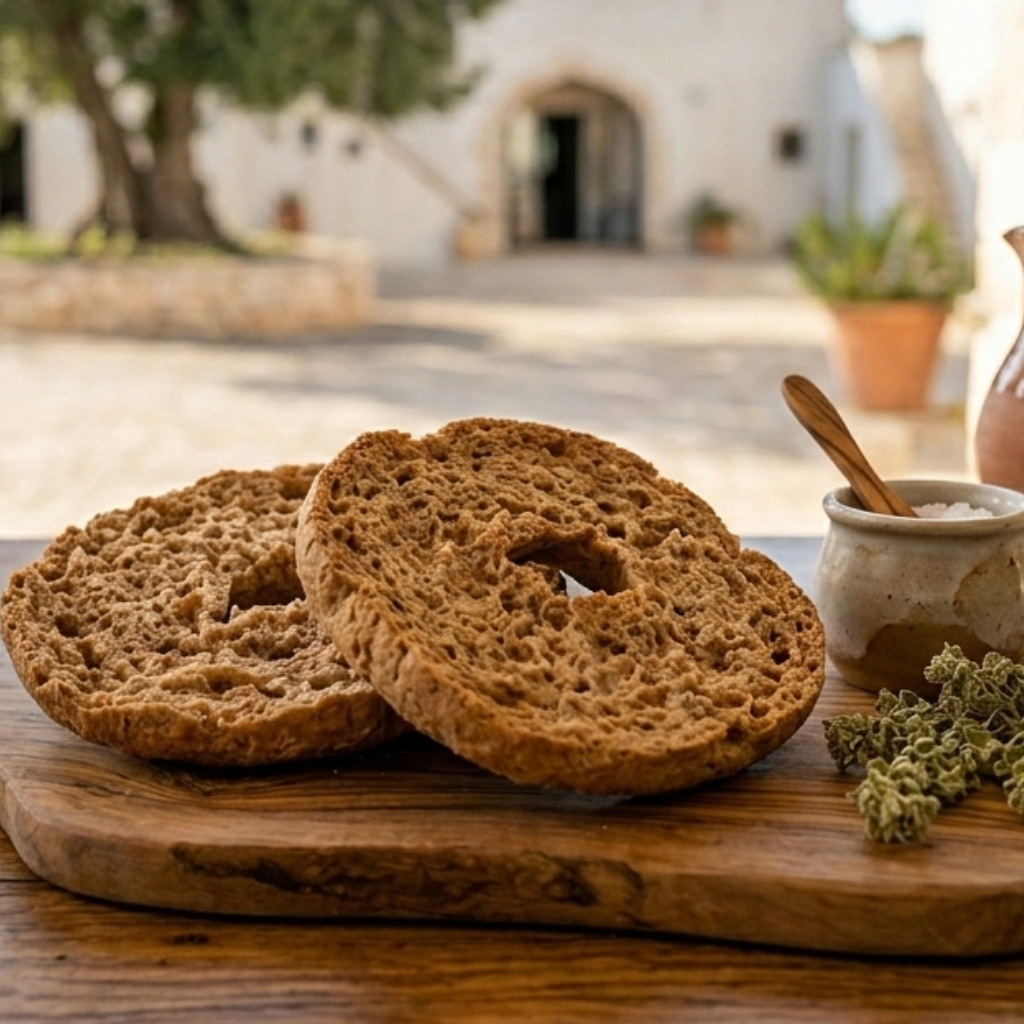
Frisa tradition emerges from a simple, practical need: preserving bread for long stretches in an era when nothing could be wasted. In rustic homes and aboard fishermen’s boats, this twice-baked bread served as a precious reserve, resilient against both time and sun. Hard, essential, dry. It waited for water to awaken again. At the heart of Salento’s traditional cuisine, frisa is more than sustenance, it is a handed-down gesture. It carries the memory of kneading hands, ovens fired at dawn, and grain slowly milled. Among the region’s classic dishes, it perhaps best captures the delicate balance between necessity and beauty, between apparent poverty and authentic abundance.
It was never conceived as a complex recipe, but as a practical solution. And it is precisely in this simplicity that its enduring charm lies.
The Slow Ritual of Preparation: Water, Olive Oil, Tomato, and Oregano
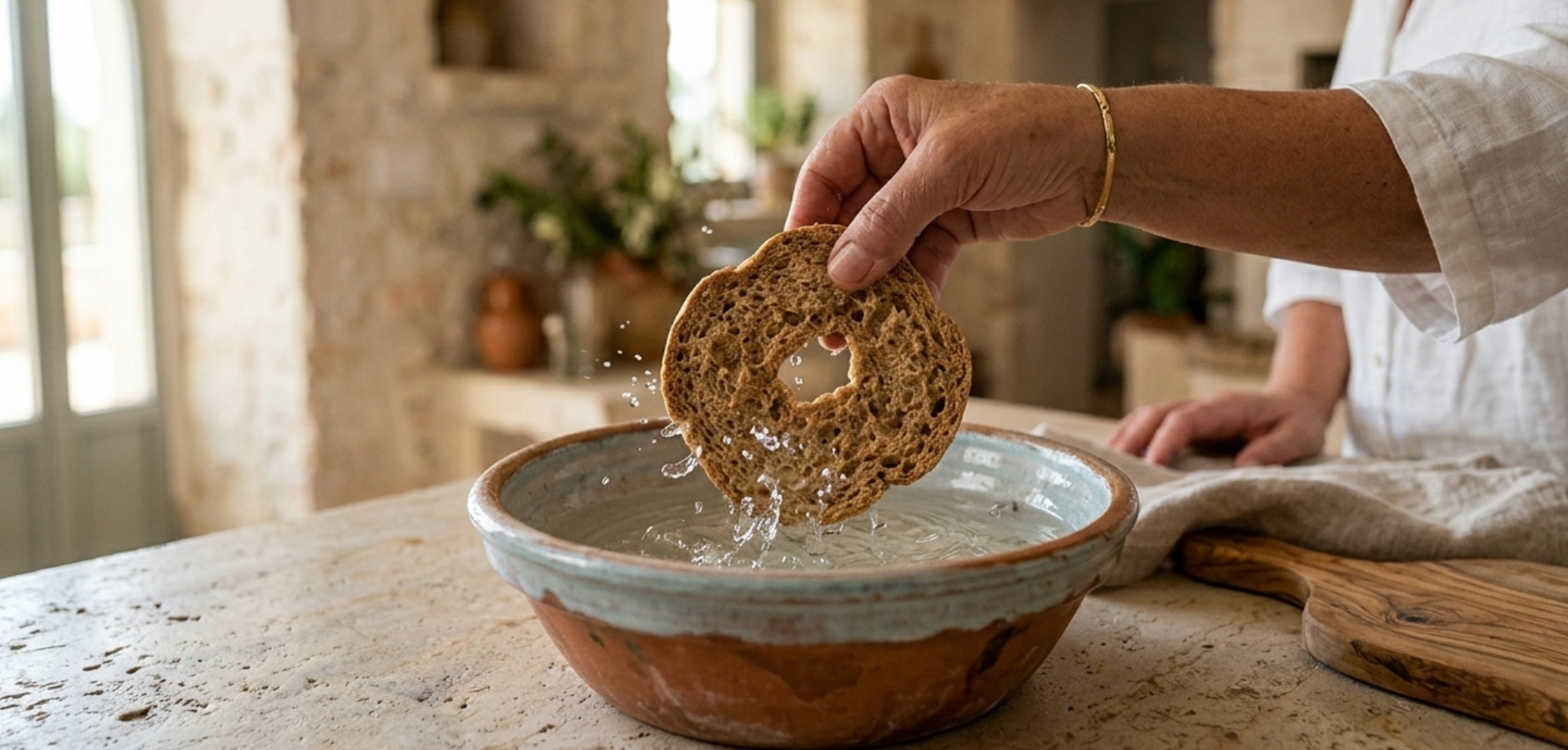
Preparing a frisa is a quiet, almost meditative ritual. It demands no extraordinary skill, only care. A quick dip in water, a fleeting yet decisive moment. Too long, and it softens; too short, and it remains closed, unyielding. The balance is learned by observing, not reading.
The Vital Role of Water: The Breath of Life
Water is the first breath. It transforms hardness into receptivity, making the bread ready to embrace what follows. Once, wells provided fresh, mineral-rich water; today, the gesture endures: immerse, lift, wait a heartbeat.
Extra Virgin Olive Oil and the Garden: Simplicity as Identity
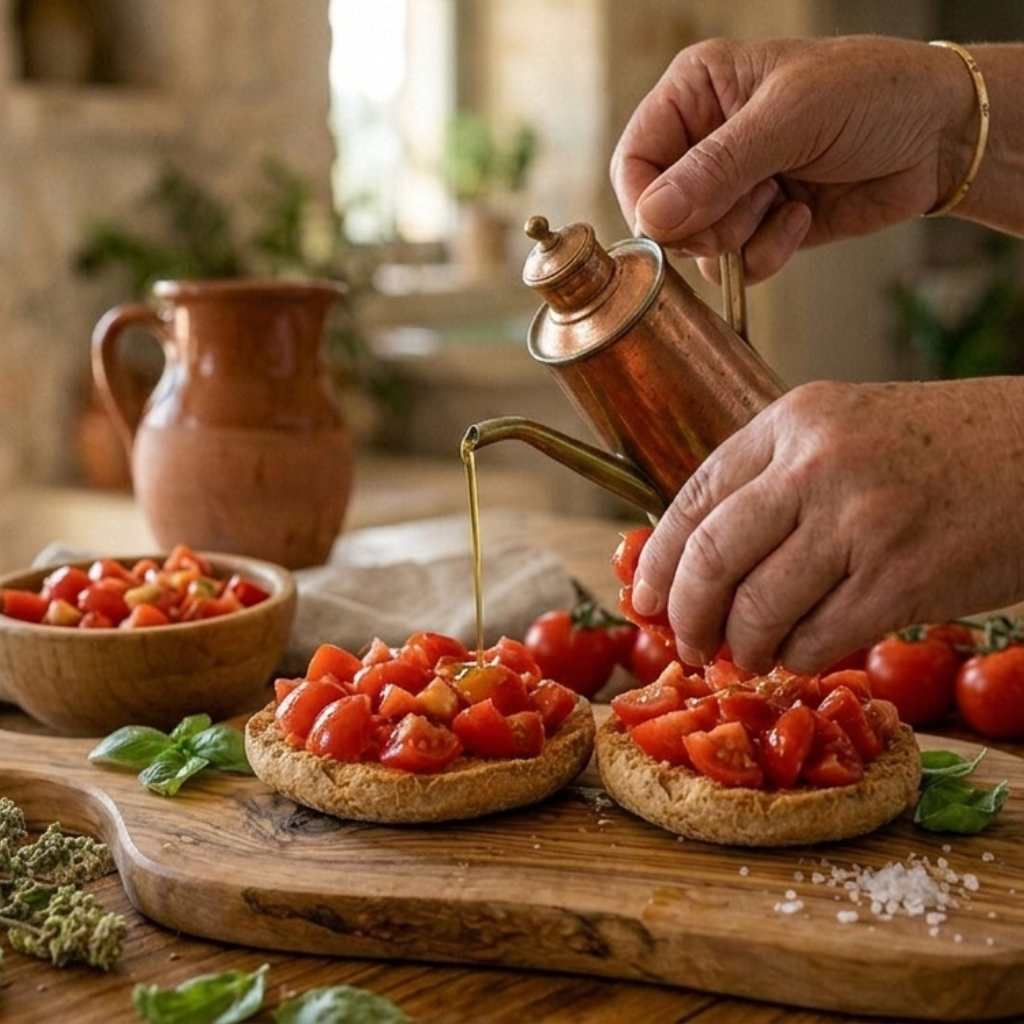
Then comes generous drizzle of extra virgin olive oil not just a condiment, but culture, landscape, liquid light. Ripe tomatoes, broken by hand, never perfectly sliced. Wild oregano, sun-scented. Sometimes capers, black olives, a pinch of sea salt. Here, frisa becomes the narrative of Salento’s flavors: few ingredients, yet true. Each preserves the character of the land it hails from. It is not a fast dish, even if prepared in minutes; it requires presence. A gentle invitation to slow down.
Simplicity and Mediterranean Culture: Why Frisa Is More Than Bread
Frisa is a quiet emblem of the Mediterranean diet: cereals, extra virgin olive oil, fresh vegetables essential ingredients, combined for balance and nourishment. But there is more. In Mediterranean culture, food is not only sustenance.
It is sharing. Frisa is brought to the table, dressed together, personalized. Each adds a touch of themselves: a basil leaf, a hint of chili, a sliver of tuna.
Frisa is a preparation that welcomes rather than dictates.
In an era dominated by complexity and speed, Salento’s frisa reminds us that quality does not stem from abundance but from harmony and the origin of the ingredients.
What to Eat in Salento: Frisa Among Traditional Dishes
When pondering what to eat in Salento, frisa cannot be overlooked. Alongside hand-rolled orecchiette, eggplant parmigiana, and festive pittule, it embodies one of the most authentic expressions of the region’s cuisine.
It is the summer dish par excellence, perfect after a day by the sea, light yet satisfying. Its strength lies in versatility: vegetarian, enriched with tuna, paired with grilled vegetables, or savored in its purest form. In every version, it maintains its identity.
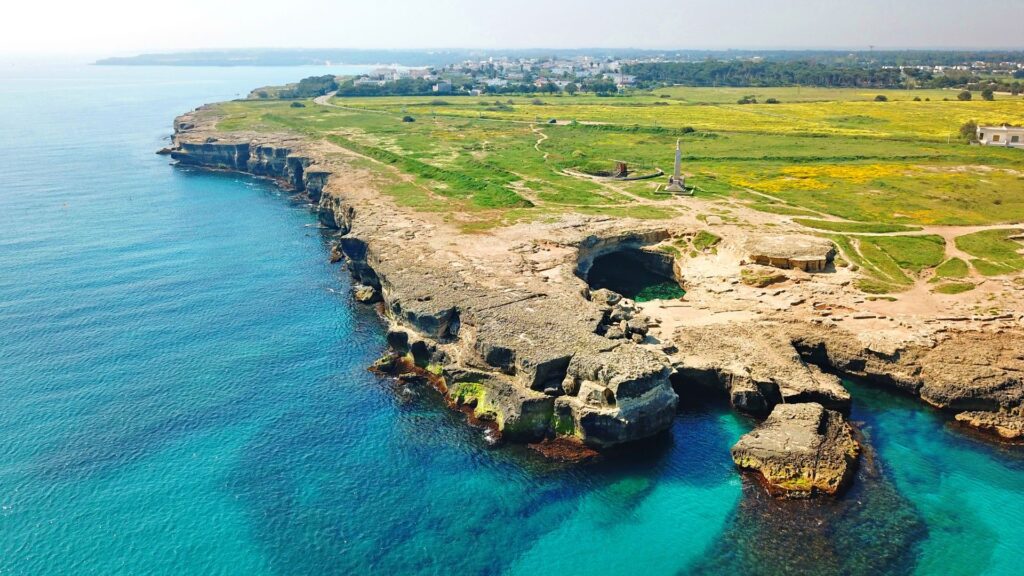
Among Salento’s traditional dishes, Frisa perhaps best interprets the landscape itself: golden wheat, ancient olive groves, gardens kissed by the salty wind.
The Flavors of Salento in a Masseria: An Authentic, Contemporary Experience
To savor a frisa in a masseria is to rediscover time itself.
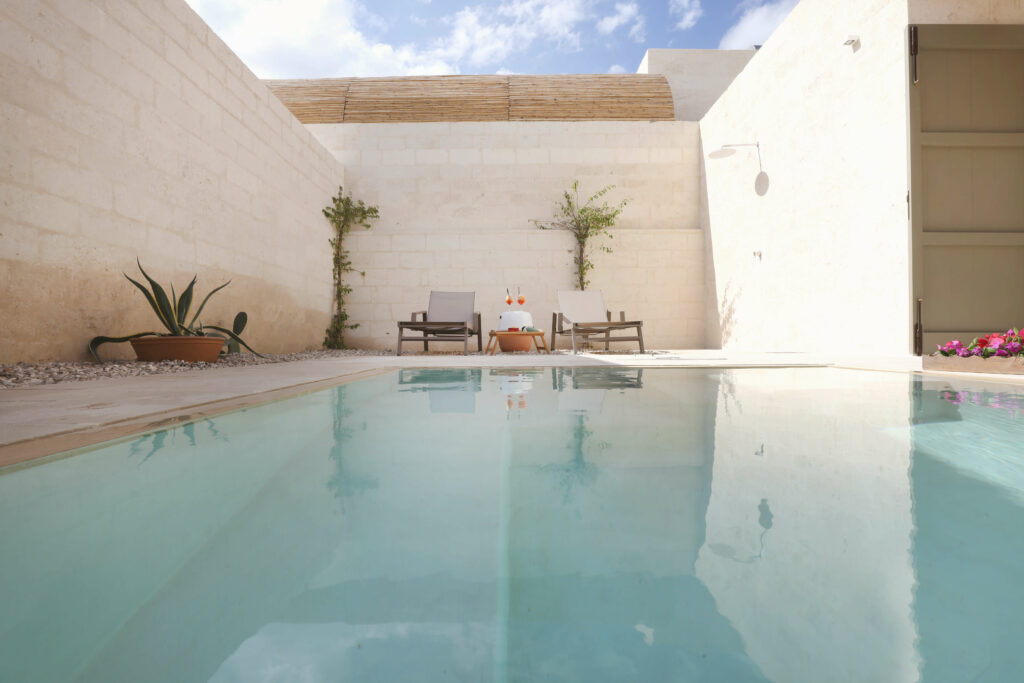
In the quiet of a whitewashed courtyard, amidst Lecce stone and slow-filtering light, simplicity becomes experience. Tomatoes harvested from the garden, locally produced olive oil, aromatic oregano: every ingredient remains intimately connected to the land.
Here, frisa is more than a summer dish; it is a way of inhabiting a place. A light lunch under the pergola, a refreshing pause after cycling among olive trees, a moment where taste and serenity converge. Salento is told not only through its landscapes but through what graces the table. Its flavors reveal a lifestyle of slowness, seasonality, and respect. And Salento’s frisa, in its apparent simplicity, preserves all of this. For taste is never merely taste.
Frisa is memory. Identity. Time returned, each time water meets bread and brings it back to life.
FAQ
Salento’s frisa is a twice-baked bread from the Apulian region, soaked in water and topped with olive oil, tomatoes, and herbs. It embodies tradition, simplicity, and the Mediterranean diet.
Frisa is briefly dipped in water, drizzled with extra virgin olive oil, and topped with fresh tomatoes, wild oregano, olives, or capers. The ritual emphasizes balance, freshness, and connection to the land.
Frisa is ideal in summer, after a day at the beach or a light lunch in a masseria. Its refreshing, versatile preparation suits both vegetarian and seafood variations.
Frisa represents the region’s culinary identity, combining practicality, history, and local flavors. It reflects the Mediterranean values of seasonality, simplicity, and communal sharing.
Yes, frisa invites personal touches. Common additions include basil, chili, tuna, or grilled vegetables. Its simplicity allows each diner to bring their own flavor while preserving the dish’s essence.