

The Rose Window of Santa Croce in Lecce: the Five Hidden Faces of Lecce Baroque
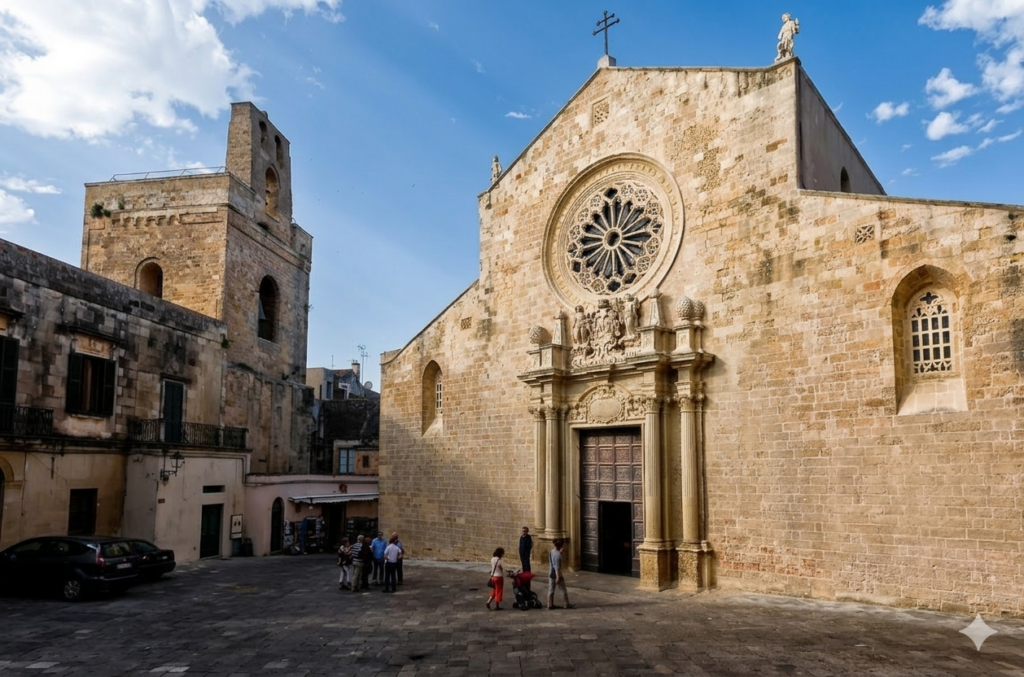
Anyone who pauses in front of the façade of the Basilica of Santa Croce in Lecce is immediately struck by the richness of Lecce’s Baroque architecture. The entire surface seems alive: carved stone filled with symbols, figures and movement. At the centre of this visual narrative stands the great rose window, the symbolic and architectural heart of the façade. It is far more than a monumental window. The rose window of Santa Croce is a complex composition designed to communicate through light, stone and a layered system of details that only reveal themselves to those who take the time to look closely.
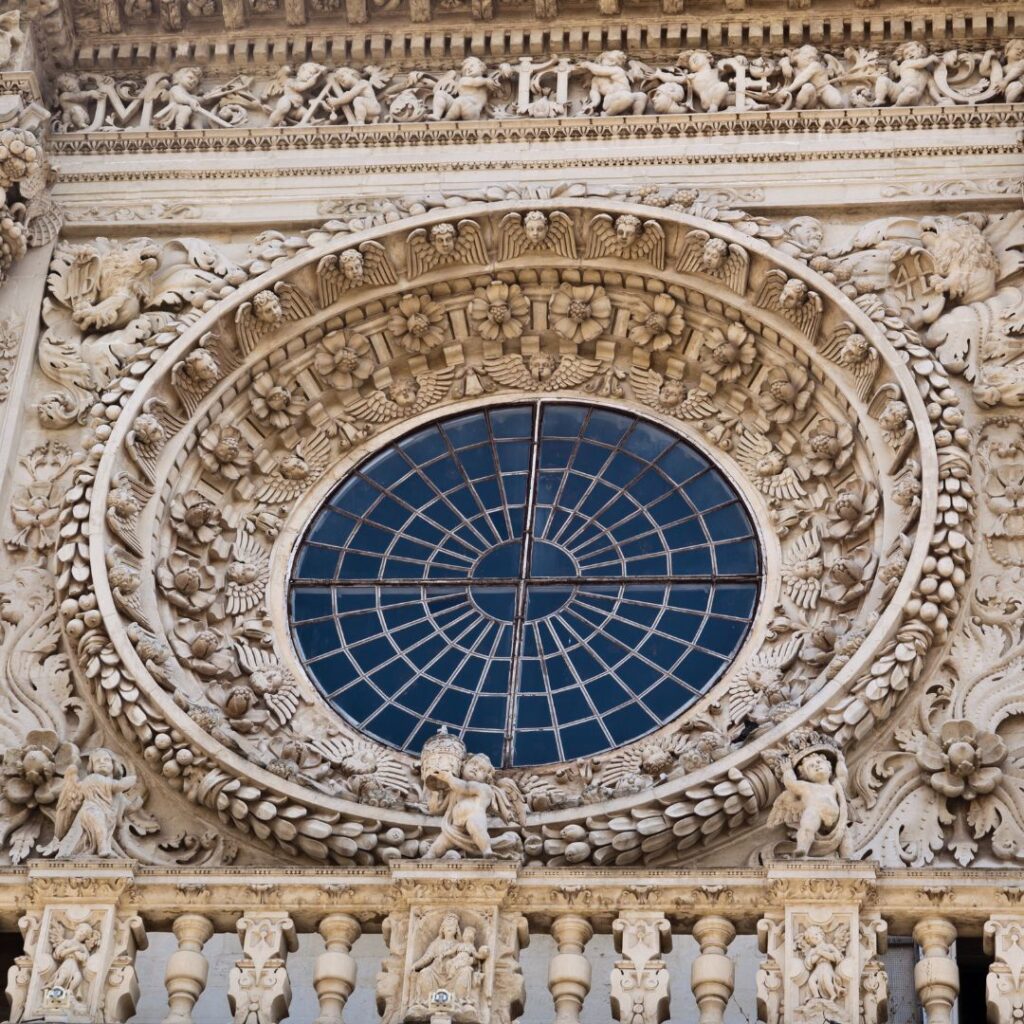
The rose window, the symbolic heart of the façade
The circular form of the rose window evokes ideas of perfection, eternity and continuity. Carved in Lecce’s soft local stone, it dominates the façade like a great eye filtering light while silently watching over the city. Yet the circle is not static. It is animated by a continuous sense of movement created by the intricate interplay of natural and figurative elements surrounding it. Leaves, scrolls and sculptural details seem to spiral outward, giving the façade its theatrical rhythm and unmistakable Baroque dynamism.
Nature, abundance and movement
Around the rose window unfolds an extraordinary decorative composition made of leaves, fruit and vegetal motifs: lemons, pomegranates, grapes and pinecones. In the symbolic language of the Baroque, these elements evoke abundance, fertility and the constant renewal of life. Angels and playful cherubs appear among the carvings, arranged around the circular structure of the window. Their presence brings energy and motion to the composition, as if they were dancing across the stone. Sacred symbolism and everyday imagery coexist here, blending solemnity with a sense of celebration.
Allegorical figures and history carved in stone
On either side of the rose window stand powerful allegorical figures representing Faith and Fortitude. Below them, two lions support shields bearing the date 1646, marking the completion of the second architectural level of the basilica. These sculptural elements connect the decoration to a specific historical moment while reinforcing the moral and spiritual message of the façade. They balance the exuberance of Baroque ornamentation with a sense of strength, order and permanence.
The five hidden faces of the rose window
Only by observing the carvings carefully do five small human faces begin to emerge among the leaves and intricate stonework. One of them is sometimes interpreted as a possible self-portrait of Giulio Cesare Penna, the architect who oversaw the completion of the basilica’s upper façade. Their true identity, however, remains uncertain. What matters more than who they represent is the gesture itself: a subtle, human presence hidden within a monumental work. Perhaps a playful detail, perhaps a silent signature left in stone.
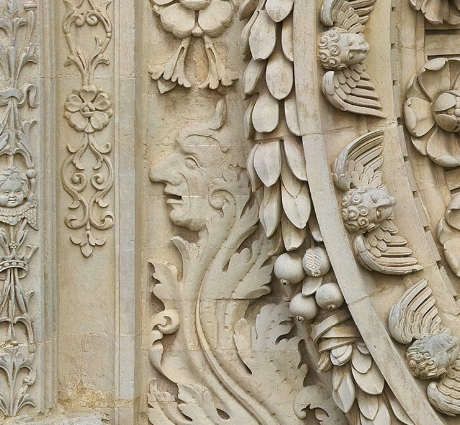
A rose window that watches and tells stories
Seen as a whole, the rose window of Santa Croce becomes a sculpted narrative. It filters the sunlight, observes the city and reveals new details depending on the hour of the day and the gaze of the visitor. The five hidden faces are just one layer of meaning within this extraordinary Baroque composition. They perfectly express the spirit of Lecce’s Baroque: an art that never reveals itself all at once, but invites curiosity, patience and a closer look.
FAQ
The Basilica of Santa Croce is located in the historic centre of Lecce, in Piazza Santa Croce, just a short walk from Corso Vittorio Emanuele and Piazza Sant’Oronzo.
The Basilica of Santa Croce in Lecce can be visited throughout the year. Access is allowed during public opening hours, which may vary depending on religious services. It is advisable to check the schedule before visiting. Entrance fee required.
The rose window of the Basilica of Santa Croce is one of the most iconic elements of Lecce Baroque. It combines architectural function, decorative richness and symbolic meaning, and is renowned for its intricate carvings in Lecce stone.
The rose window features natural elements such as fruits and leaves, angels and cherubs, allegorical figures like Faith and Fortitude, as well as lions and geometric motifs linked to the idea of life’s cyclical nature.