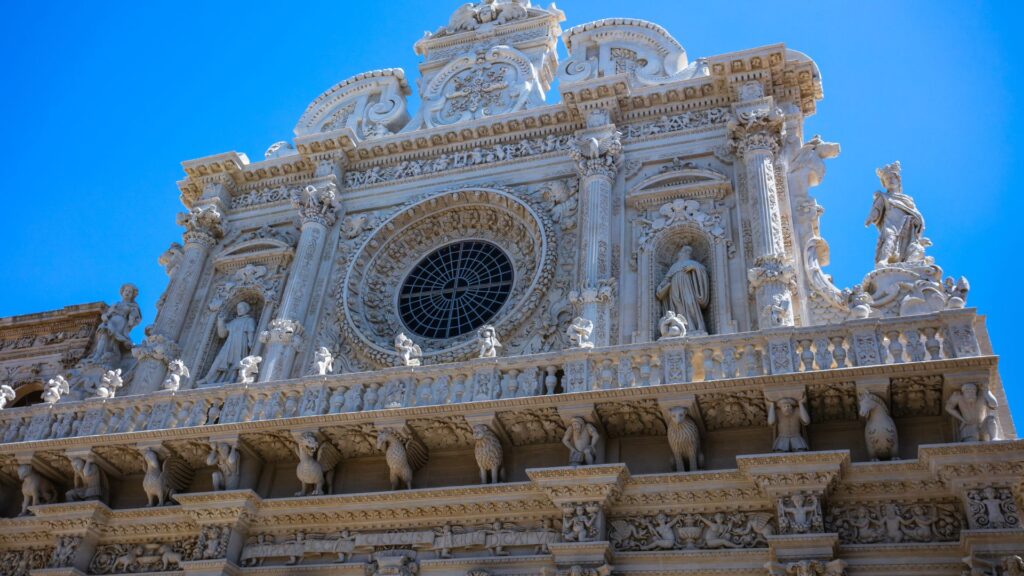


Otranto Cathedral: where Stone, Light and Memory converge
In the heart of Otranto, just steps from the sea, the Otranto Cathedral safeguards one of the most enigmatic masterpieces of medieval Europe. Its ancient walls hold a singular creation: an immense mosaic floor that transforms sacred space into a symbolic narrative woven from images, myths and visions.
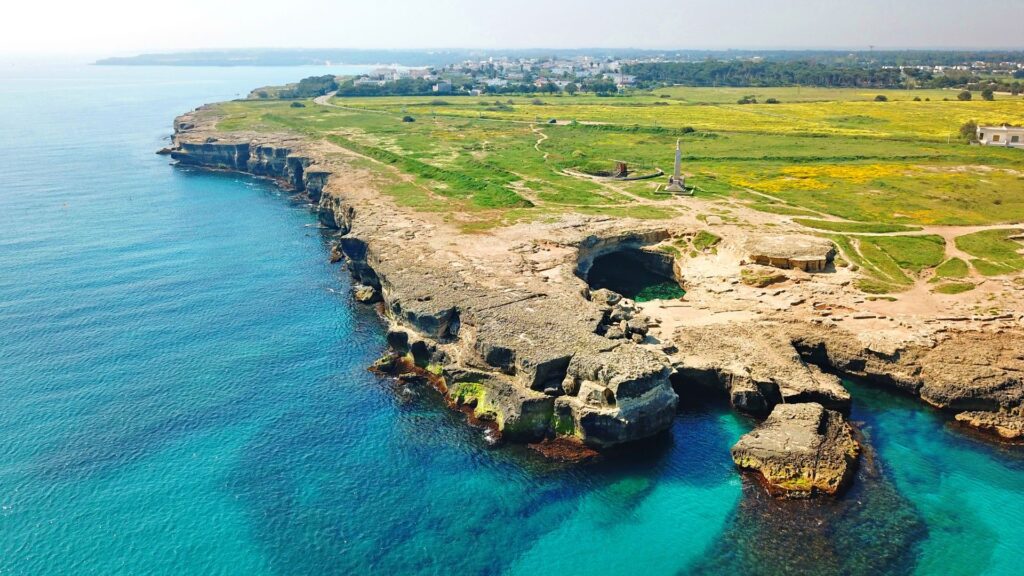
Here, where the Adriatic meets the Ionian and Italy turns its gaze eastward, stone seems to retain the shimmer of the sea, returning it as an atmosphere suspended between spirituality and memory. The Cathedral is more than a place of worship, it is the living soul of a borderland city shaped by encounters, invasions and cultural exchange.
Crossing its threshold is not simply a visit; it is an immersion into a space where history becomes tangible.
The Tree of Life: the beating heart of Otranto Mosaic
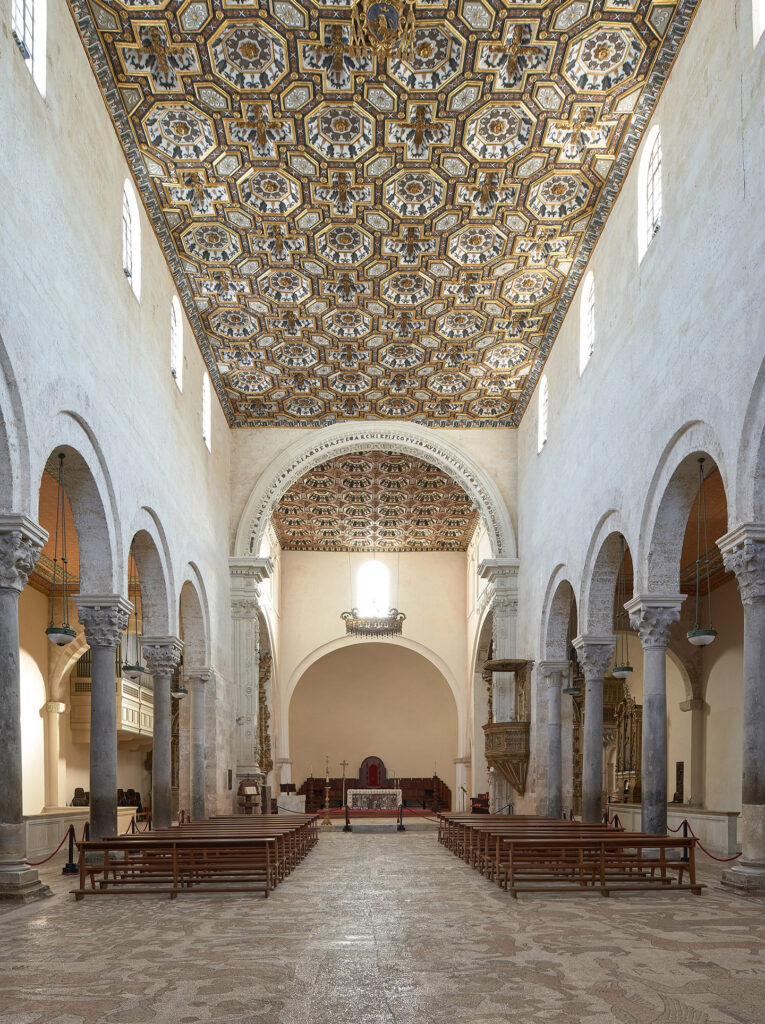
Created between 1163 and 1165, the mosaic floor of Otranto Cathedral stands as one of the most complete and captivating examples of medieval art in Apulia. It is not merely decoration, but a true “Bible for the poor” and, at the same time, an encyclopedia of 12th-century knowledge.
The Vision of Pantaleone
The architect of this vast narrative was the monk Pantaleone, likely of Greek-Byzantine origin and associated with the Abbey of San Nicola di Casole. Working with local artisans, he arranged nearly sixteen million limestone tesserae into a sweeping composition structured around a monumental Tree of Life.
Rising from the entrance and extending toward the altar, this symbolic tree supports the entire known universe, its branches carrying stories that move from original sin to redemption.
A labyrinth of symbols: between Faith, Myth and Legend
What makes this medieval mosaic of Salento truly unique is the boldness of its composition. Pantaleone reached far beyond scripture, drawing from classical mythology, chivalric literature and Eastern traditions. The result is a cultural dialogue only a port city like Otranto could inspire.
From biblical figures to the Arthurian Cycle
Looking closely, the mosaic reveals unexpected and fascinating details:
- King Arthur appears riding a goat, a striking sign of how northern European legends traveled into the Mediterranean world.
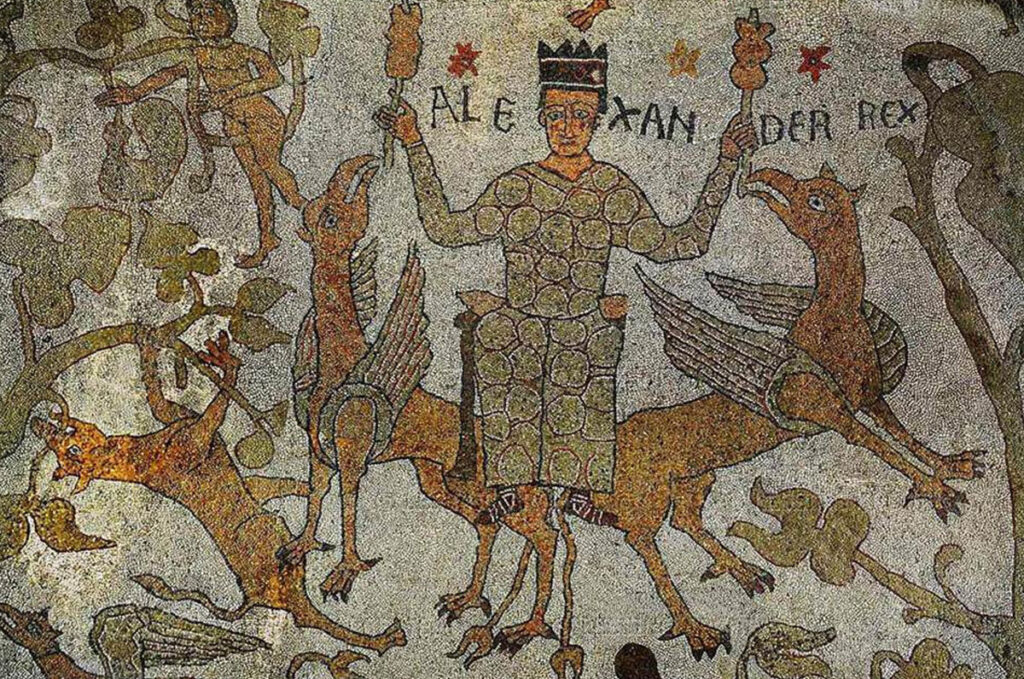
- Alexander the Great is depicted ascending toward the sky on a chariot drawn by griffins, an allegory of human ambition and its limits.
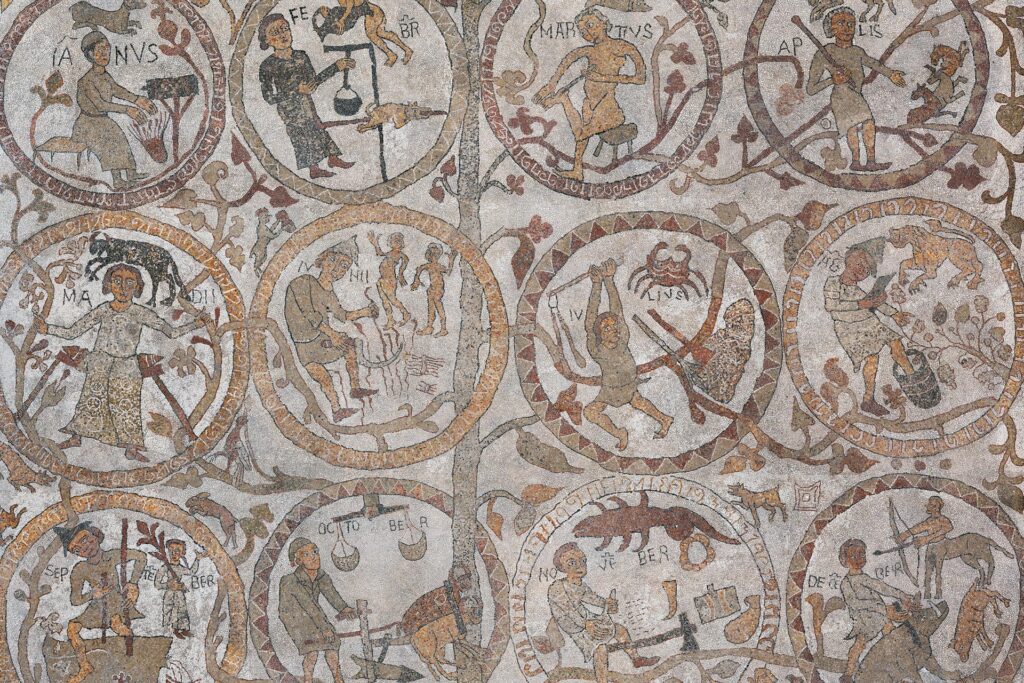
- The zodiac unfolds as a reminder of cyclical time, nature and agricultural rhythms, seamlessly integrated into a divine vision.
- Mythical creatures, centaurs, unicorns and dragons coexist with biblical scenes such as Cain and Abel or the Tower of Babel, forming an apparent chaos that ultimately resolves into the unity of the Tree.
Medieval Art in Apulia: a Mediterranean Memory
The mosaic of Otranto is not an isolated marvel, but the culmination of a broader artistic flowering that made Apulia a bridge between East and West. In a time when knowledge was reserved for the few, the Cathedral offered a shared vision of the world.
Byzantine thought meets Norman rigor, while echoes of Arabic bestiaries enrich the imagery. This layered identity still defines Salento today, a land shaped by centuries of exchange, openness and cultural sedimentation.
Visiting Otranto: a Slow Journey Through Light and Stone
There is a particular way to experience Otranto: slowly. After taking time to read the mosaic, continue toward the Chapel of the Martyrs, where the relics of 813 habitants are preserved men who, in 1480, chose sacrifice over renunciation of their faith during the Ottoman invasion of Otranto.
Stepping back into daylight, the brilliance of the old town can feel almost blinding. Wander along the bastions, admire the Aragonese Castle of Otranto and let your gaze drift toward the horizon on the clearest days, the mountains of Albania appear faintly across the sea.
From the Quiet of Borgo Sentinella to the Wonder of Otranto
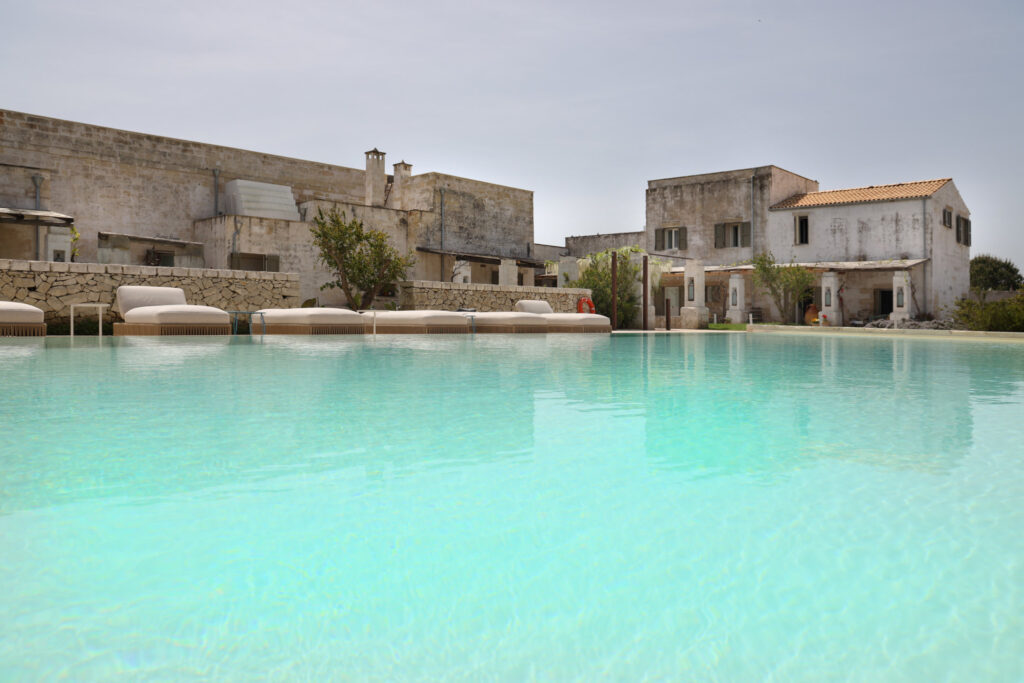
Staying at Masseria Borgo Sentinella offers the rare privilege of experiencing Salento at a gentler pace. Just a short distance from Otranto, it becomes a retreat where cultural discovery meets the restorative silence of the countryside.
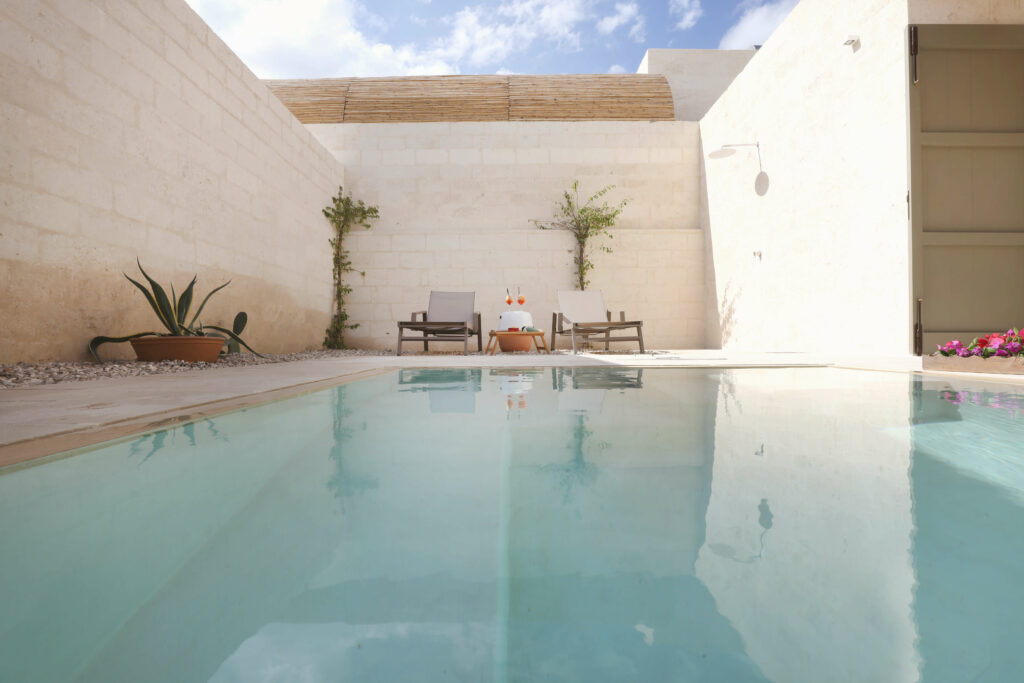
A visit to the Cathedral is best savored in quieter hours perhaps on a soft morning in the low season, when light filters through narrow windows and ignites the mosaic’s colors. Returning to the masseria, the courtyard and pool invite reflection: a glass of local wine in hand, the story of Pantaleone continues to echo softly, like an inner mosaic slowly composing itself in the stillness.
FAQ
Otranto Cathedral mosaic is unique for its extraordinary blend of biblical stories, myths and medieval symbolism. Created in the 12th century, it combines diverse cultural influences into a single visual narrative structured around the Tree of Life, making it one of Europe’s most fascinating medieval artworks.
The mosaic in Otranto Cathedral was created by the monk Pantaleone. He worked with local craftsmen to assemble millions of stone tesserae, crafting a complex symbolic vision that reflects both religious teachings and the broader cultural knowledge of the medieval Mediterranean.
The Tree of Life in Otranto Cathedral represents the structure of the universe and the journey of humanity. Its branches connect biblical events, mythological figures and cosmic symbols, illustrating the path from sin to redemption within a unified spiritual vision.
The best time to visit Otranto Cathedral is early in the morning or during the low season. Visiting during quieter hours allows you to fully appreciate the mosaic’s details, especially when natural light enhances the colors and atmosphere.
Near Otranto Cathedral, visitors should explore the Chapel of the Martyrs, the Aragonese Castle and the historic bastions. Together, they offer a deeper understanding of Otranto’s history as a crossroads of cultures and a place of profound memory.